

Privacy and external DPO
An external partner to support your organisation’s privacy practices and, when appointed, serve as its DPO.
- GDPR
- External DPO
- Processing records
- Data subject rights
 AHKORIS
Privacy · Team support · Cyber-resilience
Privacy and external DPO support, specialist expertise for internal teams and assisted cyber-resilience implementation.
We turn regulatory needs into work with clear scope, responsibilities and outcomes.
GDPR · NIS2 · DORA · AI Act · ISO 27001 ·
How we can help
For organisations that need external support and teams looking for specialist expertise or additional capacity.
An external partner to support your organisation’s privacy practices and, when appointed, serve as its DPO.
Additional capacity to help your team complete projects, assessments and documentation, with coordination kept in-house.
Support in assessing and implementing cybersecurity and operational resilience requirements.
Try the tools
Start with your website or your organisation’s practices.
Website Scanner
Your website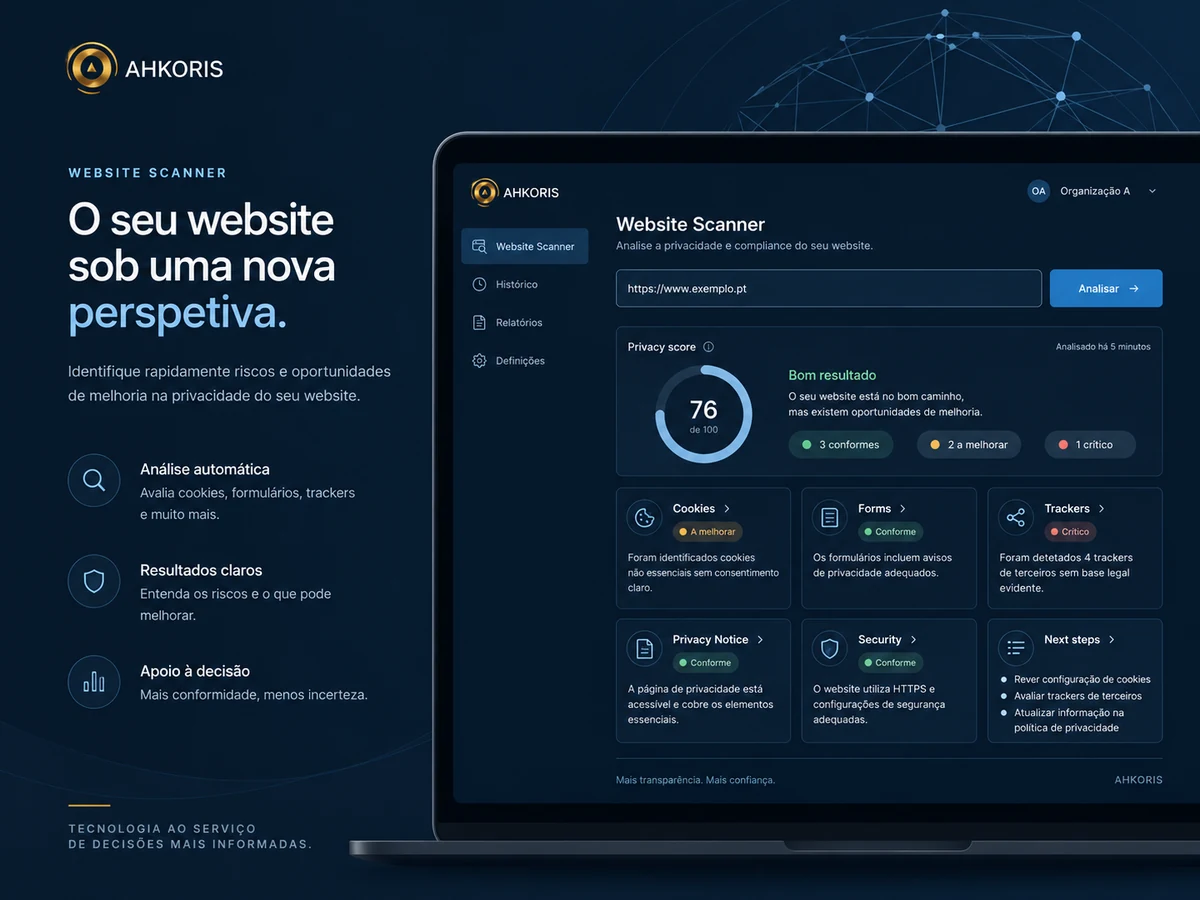
Identify signals worth reviewing in your website’s cookies, forms and privacy information.
What you can discover
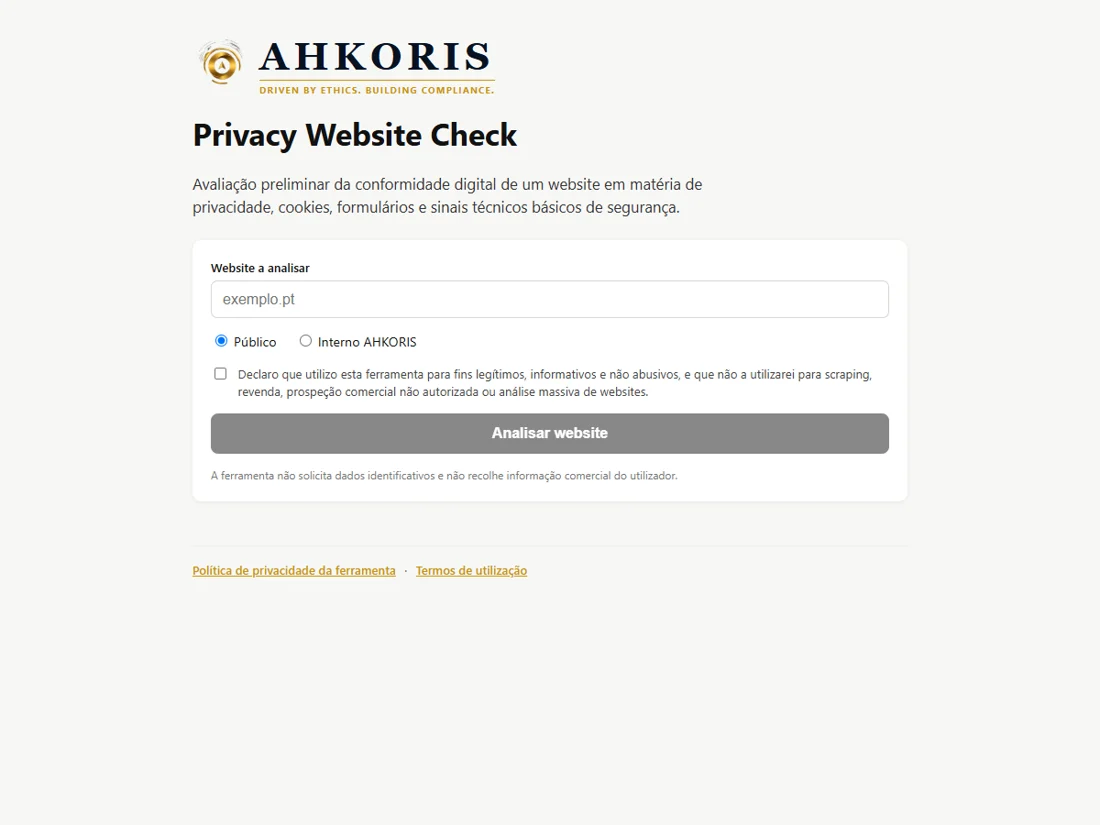
AGYLE
Compliance diagnosis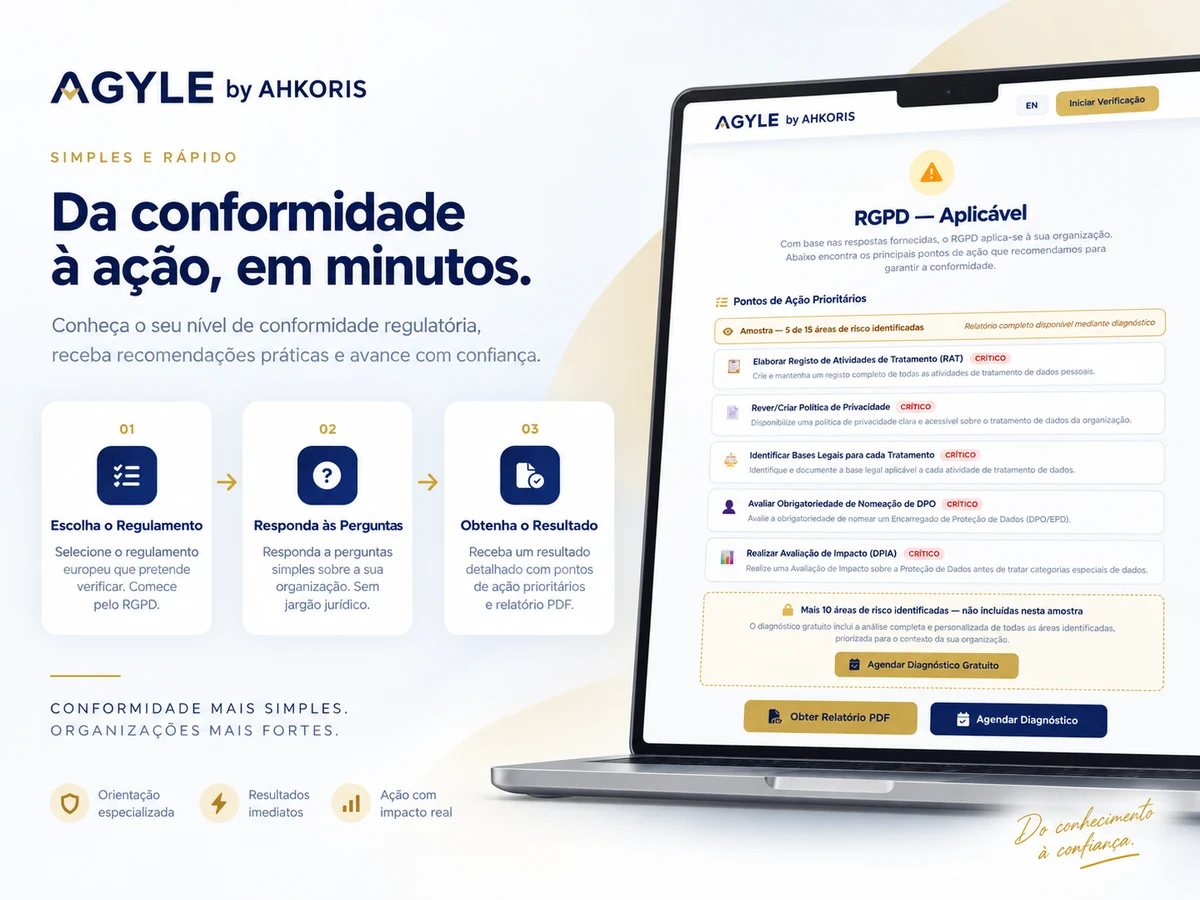
Answer simple questions to obtain a diagnosis with relevant regulations, areas of attention and priority actions.
What you can discover
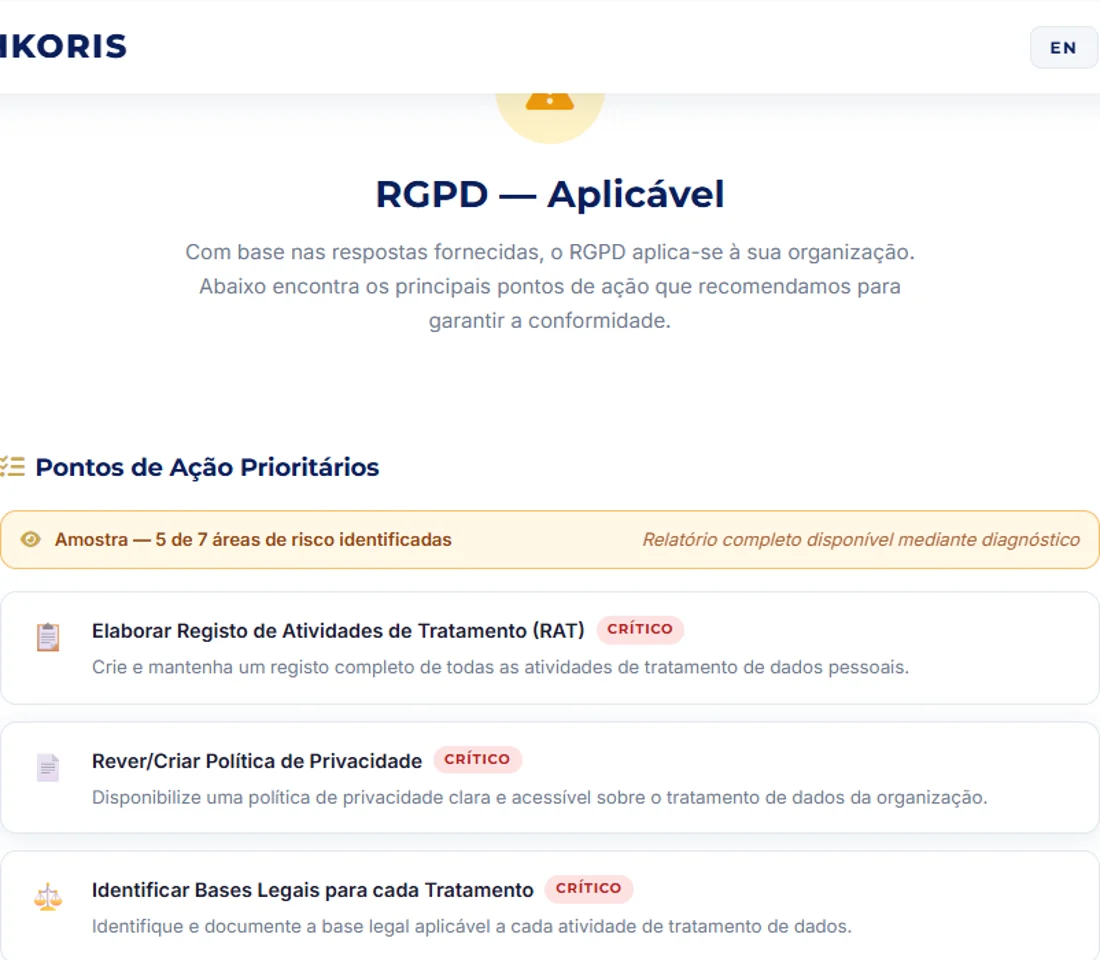
An initial perspective to identify what deserves a closer assessment.
From obligation to delivery
We turn requirements into decisions, responsibilities, processes and evidence that work in practice
Information input
Identify the context, applicable requirements, risks and the outcome the organisation aims to achieve.
Structuring
Turn requirements into priorities, activities, responsibilities, deliverables and completion criteria.
Activities and controls
Work with internal owners to implement measures and integrate requirements into the organisation’s processes.
Results and evidence
Document decisions, controls and outcomes to enable management oversight and demonstrate progress to clients, auditors or authorities.

Experience
AHKORIS combines experience in privacy, audit, risk and compliance with an approach grounded in the operational reality of each organisation.
Our founder’s professional experience includes projects and responsibilities in more than 20 countries, across different regulatory and sector environments.
About AHKORISTechnology to support delivery
SILO is being developed to connect obligations, controls, risks and evidence within a common compliance structure.
Rather than treating each requirement or framework in isolation, the Compliance Graph aims to identify relationships between different frameworks, reuse completed work and provide an integrated view of compliance status.
In development and testing
Explore the SILO projectMeasures associated with different requirements and supported by evidence.
Resources
What to consider when deciding whether to appoint a data protection officer.
Read analysis
Scope, governance and accountability: where weaknesses in NIS2 readiness begin.
Read analysis
Practical guidance on personal data, suppliers, rights and essential evidence.
Open guideFAQ
Yes. Specialist support for internal teams addresses specific expertise or capacity needs, including assessments, suppliers, documentation, evidence or defined projects.
No. The initial conversation helps us understand the need. If the problem and scope are already clear, we can prepare an intervention proposal directly.
No. Ongoing privacy support and the DPO role are distinct services. A DPO appointment is confirmed when appropriate and expressly contracted.
SILO is in development and testing and is not yet commercially available. It is not automatically included in consulting services.
Contact
An initial conversation to understand the context, your team and the outcome you want.
Arrange an initial conversationBy scheduling, your name and email are processed by Ahkoris for booking purposes. See our Privacy Policy and Cookie Policy.
Submit or track a complaint on the official platform.